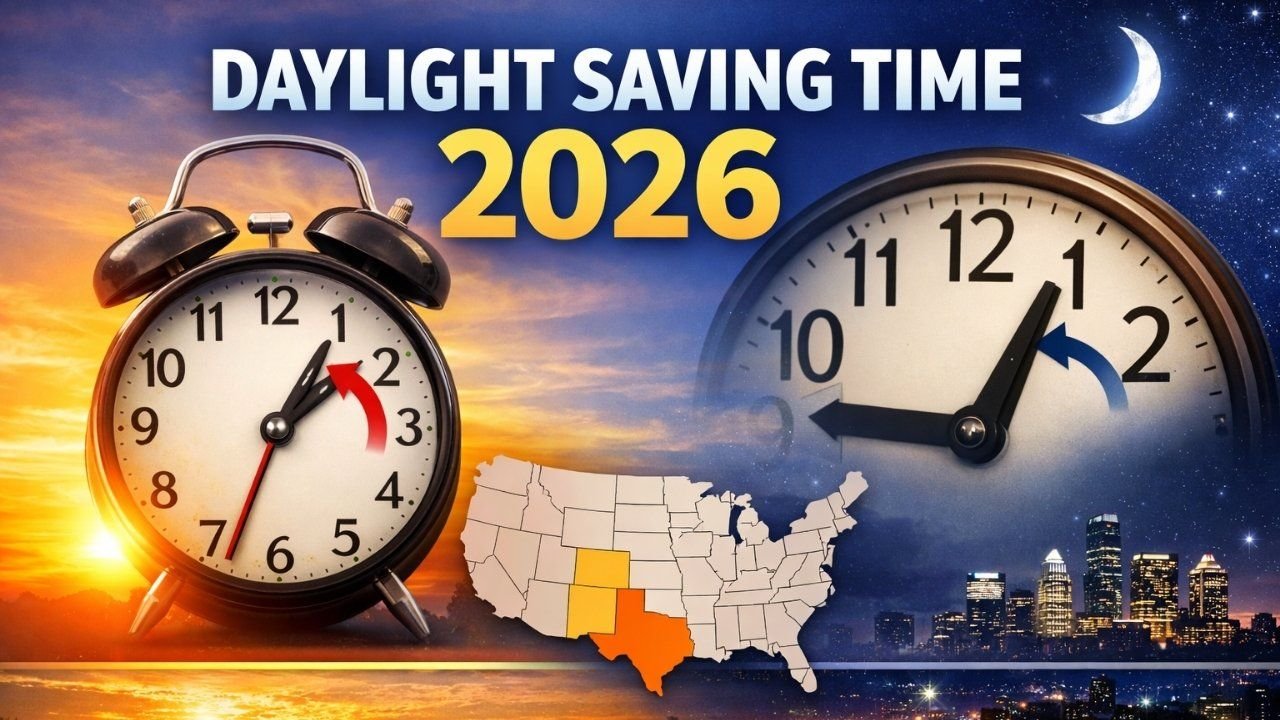
As debates about ending daylight saving time continue, most U.S. residents will still change their clocks in 2026. Despite legislative proposals and state-level efforts, federal law remains unchanged, and the twice-yearly clock shift is scheduled as usual.
Understanding the exact dates, affected regions, and history of DST can help households, businesses, and travelers plan ahead for 2026.
When Daylight Saving Time Begins and Ends in 2026
Start of DST
- Date: Sunday, March 8, 2026
- Time: 2:00 a.m. → 3:00 a.m.
- Clocks move forward one hour, resulting in later sunsets and darker mornings.
- Most digital devices update automatically, but analog clocks and appliances may need manual adjustment.
End of DST
- Date: Sunday, November 1, 2026
- Time: 2:00 a.m. → 1:00 a.m.
- Clocks move back one hour, giving an extra hour of sleep and earlier daylight in the morning.
| Event | Date | Clock Change |
|---|---|---|
| DST Begins | March 8, 2026 | 2:00 a.m. → 3:00 a.m. |
| DST Ends | November 1, 2026 | 2:00 a.m. → 1:00 a.m. |
U.S. Regions That Do Not Observe DST

Some states and territories are exempt from daylight saving time:
| Location | Observes DST? |
|---|---|
| Most of Arizona | No |
| Hawaii | No |
| Puerto Rico | No |
| Guam | No |
| U.S. Virgin Islands | No |
These areas remain on standard time year-round, providing examples of life without seasonal clock changes.
Why DST Continues Despite Debate
Congress has considered ending DST multiple times. The Sunshine Protection Act passed the Senate in 2022 but stalled in the House, leaving the current schedule in place. State laws, such as Texas’ “Texas Time” bill, cannot override federal law, meaning clocks in Texas will still change in 2026.

Historically, DST was first adopted in 1918 as a wartime energy-saving measure. The current March–November schedule has been in effect since 2007, designed to align waking hours with longer daylight during the summer months.
How to Prepare for the 2026 Time Change
- Check non-smart clocks and appliances ahead of time.
- Adjust schedules for transportation, work, and school accordingly.
- Expect darker mornings after March 8 and earlier sunsets after November 1.
- Plan travel, medical appointments, and meetings around the time change to avoid conflicts.
FAQs
When does daylight saving time start in 2026?
DST begins on Sunday, March 8, 2026, at 2:00 a.m., when clocks move forward one hour.
When does daylight saving time end in 2026?
It ends on Sunday, November 1, 2026, at 2:00 a.m., when clocks move back one hour.

Will DST be eliminated before 2026?
No. Federal law has not changed, so DST will continue in 2026.
Does Texas observe DST in 2026?
Yes. Despite state legislation, Texas will still follow the standard clock changes.
Which U.S. states do not observe DST?
Most of Arizona, Hawaii, and U.S. territories like Puerto Rico, Guam, and the Virgin Islands do not observe DST.
Conclusion
For now, Americans should plan for the March 8 “spring forward” and November 1 “fall back” clock changes in 2026. While debates about ending DST continue in Congress and at the state level, federal law keeps the current system in place, affecting daily routines, transportation, and business schedules. Early preparation ensures a smooth transition for families, commuters, and organizations nationwide.