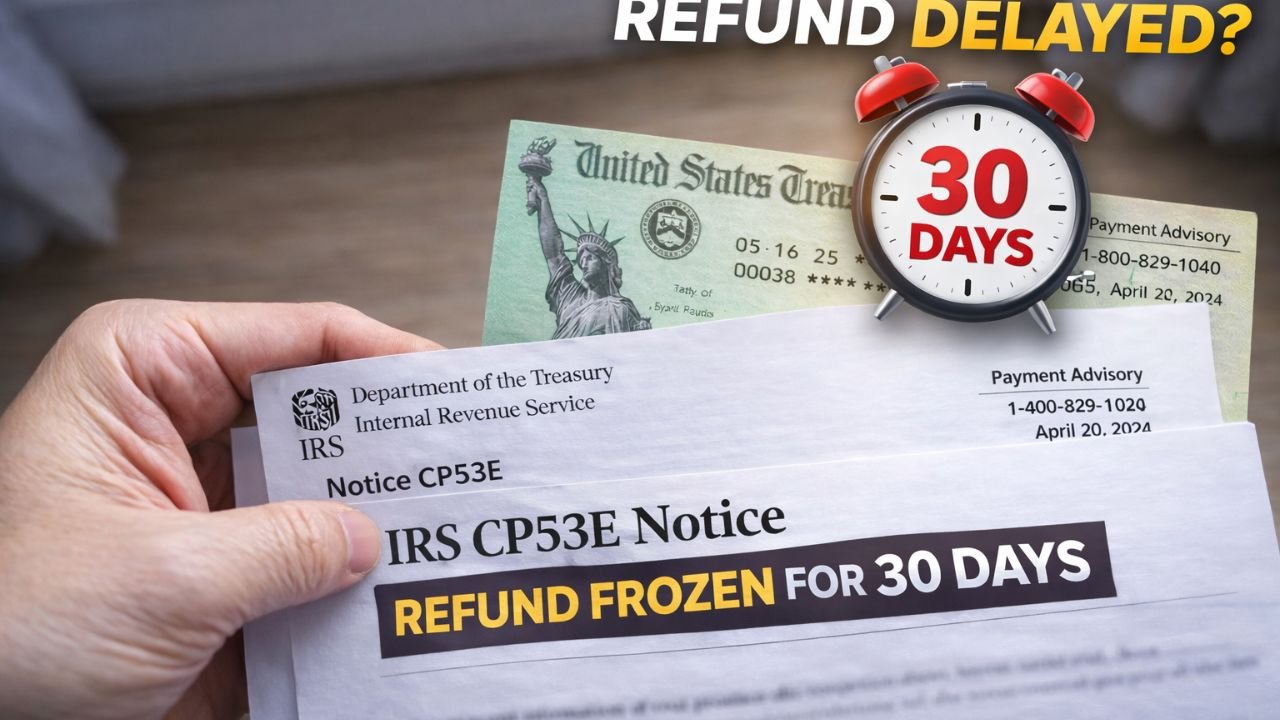
The 2026 tax season has introduced unexpected concerns for many taxpayers after the release of the IRS CP53E notice. This communication can cause confusion and anxiety, especially for those eagerly awaiting their refunds. Understanding what the CP53E notice means, why it is issued, and the steps to take can help taxpayers navigate the situation with confidence and avoid unnecessary stress.
What Is the IRS CP53E Notice?
The CP53E notice is an official alert from the IRS indicating that a taxpayer’s refund has been temporarily frozen. Typically, this freeze lasts up to 30 days while the IRS conducts additional verification. Most often, the issue is linked to incorrect or mismatched bank account information, which prevents the direct deposit from being processed securely.

The primary purpose of this notice is to protect taxpayers, ensuring that refunds are delivered safely and to the correct account.
Why Refunds Are Frozen for 30 Days
One of the main reasons for a CP53E notice is discrepancies in the banking details provided on the tax return. If the account number or routing number does not match IRS records, the agency cannot process the direct deposit. Rather than risk sending funds to the wrong account, the IRS temporarily freezes the payment to perform verification checks.
During this 30-day period, the IRS confirms the accuracy of banking information and determines the best way to issue the refund. In many cases, if direct deposit cannot be completed, the agency opts to send a paper check to the taxpayer’s mailing address.
Common Causes of CP53E Notices

Several factors can trigger a CP53E notice, including:
- Incorrect bank account numbers or routing numbers
- Minor typing errors in account information
- Mismatched names between the taxpayer and bank account
- Closed or inactive accounts
Understanding these causes can help taxpayers prevent similar issues in future filings.
What Happens After a Refund Is Frozen?
Once the IRS places a hold on a refund, it reviews the tax return details. If the problem is related to bank information, the agency may attempt to verify the account or choose an alternative payment method. In most situations, a paper check is issued to ensure the refund reaches the correct recipient.

While this process can extend the timeline, it prioritizes accuracy and security, giving taxpayers peace of mind that their funds are protected.
How Long Will It Take to Receive the Refund?
After receiving a CP53E notice, taxpayers typically wait up to 30 days for the IRS review to conclude. Once the review is complete, the refund is usually issued within a few weeks, depending on the delivery method. Paper checks may require additional time for postal delivery. Although the delay can be frustrating, it is a necessary step to ensure the refund is accurate and secure.
Steps Taxpayers Should Take After Receiving CP53E
If you receive a CP53E notice, follow these steps:
- Read the notice carefully: Confirm the details and understand the reason for the freeze.
- No immediate action is usually required: The IRS generally handles verification automatically.
- Verify your mailing address: If direct deposit cannot be completed, the refund will be sent as a paper check.
- Follow up if necessary: If the delay exceeds 30 days, contact the IRS with a copy of the CP53E notice and relevant tax documents.
Remaining informed and patient is key to navigating the process smoothly.
How to Prevent Refund Issues in the Future
To avoid CP53E notices in subsequent tax seasons, consider the following precautions:
- Double-check bank account and routing numbers before filing.
- Ensure the account is active and matches the taxpayer’s name.
- Use reliable tax preparation software or professional assistance.
- Review all personal and financial information carefully to minimize errors.
By taking these steps, taxpayers can reduce the risk of direct deposit failures and delays.
Difference Between CP53 and CP53E Notices
Both CP53 and CP53E notices relate to direct deposit refund issues. The key distinction is that CP53E specifically indicates a temporary freeze for additional review. Recognizing this difference helps taxpayers interpret the notice correctly and understand what actions, if any, are required.
Long-Term Impact of CP53E
Receiving a CP53E notice does not affect future refunds or tax eligibility. It is a temporary issue tied to a specific return and is resolved once the IRS completes its verification. Future refunds can proceed normally once the current issue is addressed.
When to Contact the IRS
Contact the IRS if:
- The refund is delayed beyond the 30-day review period
- No updates are available through official IRS tools
Before calling, check the refund status online and have a copy of the CP53E notice and tax return details ready. This will expedite the resolution process.
Final Thoughts
While receiving a CP53E notice can initially cause concern, it is primarily a protective measure. The notice ensures refunds are securely processed and prevents funds from being sent to incorrect accounts. By understanding the causes, following proper steps, and taking preventive measures, taxpayers can navigate the 2026 tax season efficiently and with confidence.
FAQs
1. What does an IRS CP53E notice mean?
It indicates that your refund has been temporarily frozen, usually due to issues with bank account details.
2. How long is the refund held?
The IRS typically freezes refunds for up to 30 days while verifying information.
3. Will I still receive my refund?
Yes. Once the review is complete, the refund is usually issued via paper check if direct deposit fails.
4. Do I need to take action after receiving CP53E?
In most cases, no action is required unless the delay extends beyond the expected timeframe.
5. How can I avoid this issue in the future?
Double-check all bank account details, ensure accounts are active, and verify all information before filing your tax return.